


New Research Confirms What Physiotherapists Have Long Suspected:

Good Technique — Supported by Feedback — Significantly Reduces Back Pain
For a long time, exercise technique has been a strangely polarising topic.
Some argue that poor posture is the root of most back pain. Others insist posture doesn’t matter at all. If you’ve been following the debate, it can feel confusing — are we supposed to sit up straight, or stop worrying about it altogether?
After reading some of the more recent research on persistent low back pain, I’m convinced the answer sits somewhere in the middle.
The issue isn’t posture in isolation. It’s movement — and more importantly, whether we’re getting feedback on how we move.
What the Research Actually Looked At
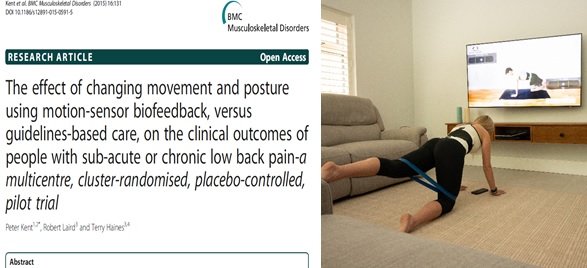
One study that stood out followed people with ongoing low back pain for a year. Instead of focusing purely on strengthening or stretching, the researchers looked at how participants moved during everyday tasks — particularly how the lower back and pelvis coordinated.
Some participants simply received standard physiotherapy advice. Others received the same advice, but with an added layer: movement-specific feedback from wearable sensors.
The difference was significant.
Those who received feedback not only improved more, but their improvements lasted. Even after treatment ended, reductions in pain and disability were maintained.
That detail really matters. It suggests this wasn’t about temporary symptom relief. It was about changing movement behaviour.
Why the “Just Sit Up Straight” Advice Falls Short
We’ve all heard the instruction: “Fix your posture.”
But what does that actually mean?
The idea that there is one perfect position we should hold all day doesn’t align with how the human body works. We’re built for variability. We’re built to shift, bend, rotate, adapt.
The problem isn’t that someone occasionally slouches. It’s that they may repeatedly load their spine in the same way, over and over, without realising it.
And that’s the key: awareness.
Without feedback, most of us revert to familiar patterns — especially when we’re tired, distracted, or under load. With feedback, we begin to recognise when we’re moving in ways that may aggravate symptoms, and we can adjust.
It’s less about “good” or “bad” posture — and more about movement quality and variation.
Bringing Feedback Beyond the Clinic
In a physiotherapy clinic, feedback is constant. A therapist might cue breathing, adjust pelvic position, or guide someone through a lift.
But once that person leaves the clinic, the cues disappear.
Many people aren’t confident they’re doing their exercises correctly. They’re unsure if they’re engaging their core. They fall back into habit.
This is where wearable technology becomes interesting.
Devices like the BackAware Belt aim to extend that feedback into daily life. Instead of rigidly forcing someone into a position, they provide subtle real-time signals when movement drifts into patterns known to aggravate symptoms.
Over time, the body learns.
That’s consistent with what we know about motor learning — repetition, awareness, and timely feedback drive lasting change.
A More Mature Conversation About Back Pain
What I took from the research isn’t that posture is everything. Nor is it irrelevant.
It’s that technique matters. And technique improves faster — and sticks longer — when feedback is involved.
Back pain is complex. It’s influenced by load, stress, sleep, activity levels, beliefs, and more. But movement quality is one piece of that puzzle we can actively influence.
If the goal is long-term resilience rather than short-term relief, helping people move better — and giving them feedback while they learn — seems like a very sensible place to focus.
And perhaps that’s why this research feels less like a revolution and more like a confirmation of what good clinicians have quietly known for years.